Biography of Francis J. Gutmann
Forestry Clerk, Radio Operator, Woodsman, CCCMan - LEM, Company 938, Quinault Ranger Station Side Camp, Olympic National Forest, Camp S-234-WA, Clearwater, WA & Company 4275 - Company 2941, Fort Lewis, WA & Camp NP-2, Camp Norada Falls, Mount Ranier National Park, WA & Camp NP-8, Camp Sunshine Point, Nisqually Entrance, Mount Ranier National Park, Washington
Employee, CCC Quartermaster, Fort Lewis, Washington
CTM, USS Pontus AGP20, United States Navy
I was a member of the CCC's from 1935 until 1940, as set forth in my Honorable Discharge and my Record of Service.
When all the Logging Camps went on strike in late 1934, I enlisted in the CCC's as a LEM (Local Experienced Man) in Aberdeen, WA at Company 938-S234 Camp. Clearwater, WA on January 4, 1935 as a Woodsman (Logger).
When all loggers went on strike in 1934 & 1935 I looked for work and had a job as a night clerk at a hotel. I also took care of the boiler room. A lady came to the hotel and asked the landlady if any of the loggers knew how to operate a radio. She said I don't think so - and as I was working in the lobby and overheard her, I stated that I did. She told me to be at the Armory in Aberdeen Monday morning and I might get a job. I went to the Armory and told an Army Officer I was there to apply for a radio operator job. He pointed our a Forest Ranger and I introduced myself. The Ranger, Joe Fulton, gave me a test on Morsse code. He asked me to write a sentence including every letter in the alphabet. I wrote out "The quick brown fox jumped over the lazy sleeping dog." He had a key and battery and started to send a short message. I missed a few letters and he tried again and I did better. At that time the Army Captain, Claude C. Crusion, the Camp Commander, came over and asked if I could type and I said yes - he told the Ranger to hire me. He told the Ranger that he couldn't hire a typist but could hire a woodsman logger as an LEM so that's how I got the job.
I was assigned to a side camp at Quinnault Ranger Station as a Forestry Clerk in the Olympic National Forest. As I could type and the Ranger needed a typist and also a Radio Operator, and as I had some radio experience in high school and knew Morse Code, I was transferred to a side camp in the Hoh River area as Forestry Clerk and Radio Operator. One June 30, 1935 Company 938 transferred to Mount Ranier NP-4 for one day.
On July 31, 1935 I was picked as a Cadre member and transferred to Fort Lewis Company 4275, which was a new camp, to assist in organizing. One day they changed the company number to 2941 from 4275, which was a 2d Corps Company, later changed to Company 252 at Fort Lewis, WA. Company 2941 (Army 3); was at Fort Lewis from August 1, 1935 to June 29, 1938. From June 30, 1938 to October 11, 1938 at Camp Norada Falls, Company 2941 NP-2 Mount Ranier National Park, a tent camp. October 12, 1938 a new camp was constructed at Sunshine Point, Mt Ranier, and Company 2941 was moved into the new camp at the Nisqually Entrance to the Park (N.P.-8), Mt Ranier, WA.
In 1937 the Louisiana Publishing Company photographed every CCC Camp in the Fort Lewis District - personnel, projects, history, and I had a copy which I later donated to the Anacortes CCC Museum run by Vic, now deceased, and Mae Olson. I have photos of camps, projects and personnel as well.
Most CCC Enrollees were chosen from welfare rolls, and usually signed up for 6 months. There were usually 200 enrollees to a Camp Company. The U.S. Army did the recruiting andf were Army Officer's Reserves called to Active Duty. The officers had charge of the camps and were responsible for housing in barrack type buildings. They were also responsible for food, clothing, medical and recreation.
After you were chosen you were taken to a camp, given your clothing and assigned to a barracks - usually double bunk steel cots and you filled a mattress cover with straw for your bed. There were 40 men to a barrack.
The technical agency had charge of the work program - supervised by a Superintendent and he usually had 4 foremen and a mechanic. The superintendents were usually political appointees at State camps. National Park and National Forest camps foremen were Rangers, Civil Service carrer personnel, or sometimes foremen were hired. The Project Superintendent in charge of the work program was given all but 21 enrollees to do the work programs and each foreman was assigned as many enrollees as he needed to do a certain project.Truck drivers were chosen by the mechanic and had to be qualified. Bulldozer operators and crane operators were chosen from the enrollees or Local Experienced Men.
The company commander had 21 enrollees selected to work in the camp. One top kick (Senior Leader), 2 clerks who had clerical experience, 1 Supply Sergeant and an assistant, Dispensary Medic and an assistant for First Aid and a 2 or 3 bed sick bay. Sometimes a civilian contractor doctor was hired. Usually 3 cooks and 3 assistant cooks and 4 mess attendants to assist the cooks, keeping the mess hall areas clean, washing dishes, peeling potatoes, and firing the stoves (usually #5 Army Rangers), 1 night watchman to keep the washroom stoves operating and Officer and Foreman stoves going, 1 woodchopper who kept the camp supplied with wood usually brought in from the projects, 1 truck driver for the trips to pick up stores and take enrollees to local towns for recreation, 1 assistant to Educational Advisor (civilian), 1 enrollee was assigned to the Officer's Quarters, mostly housekeeping, making beds, etc.
Ten enrollees were assigned as Leadetrs - 5 to the Army Camp Operation, 5 to the Technical Agency assisting the foreman. They were paid $45.00 per month. Another ten enrollees were assigned as assistant leaders. They were paid $36.00 a month. All other enrollees received $1.00 per day - $30 per month. $25.00 was mailed to their homes for welfare each month.
Ration for each CCC Camp member was issued quarterly and in the 1930's 29 cents for 3 meals a day was allowed for each member. The Chief Steward could not exceed that allowance. At Camp Roy most of the enrollees lived in Tacoma, Washington, 15 miles from camp. In fact a streetcar ran from Tacoma to Spanaway, a few miles from camp, or trucks would take enrollees to Tacoma on Friday evening and pick them up on Sunday evening. When they were away from camp and didn't eat, the Chief Steward would get their allowance so the members ate like Kings. Members on official leave would get no allotment. The foreman and superintendent paid for meals they ate in camp. Bread was purchased from the Fort Lewis Bakery at cost - two cents a loaf. Pork was three cents a pound, beef was five cents a pound.
TECHNICAL SERVICE - Forest Service, Park Service, State Forestry:
5 LEMs 1 Forestry Clerk or 1 Park Service Clerk - called Leaders, usually older enrollees skilled in their work. They were paid $45.00 per month. 5 Assistant Leaders - 1 Tool Room clerk, 1 saw filer, 3 assistant foremen and leaders. They were paid $36.00 per month. WORK PROJECTS
938 State Camp Clearwater - Build Bridge over Clearwater River, fall snags, build fire trails, build fire suppression road to the Hoh River, several miles north.
938 Side Camp Hoh River - Build road south to Clearwater, several miles.
938 Quinault Side Camp Olympic National Forest - Build camp grounds, fall snags, forest fire prevention, build fire breaks and trails, install water wheel to generate electric power.
Camp 2941 - Camp Roy Army 3 - sent fire fighting crew to Bandon, Oregon (1938). Sent fire fighting crew to Darrington, Washington. 2941 Camp Roy - Fire suppression work - trails on Fort Lewis Reservation, 100,000 acres. Built two fire lookout towers wit Osbourne Fire Finders, constructed telephone lines and maintained them 10 miles to Fort Lewis proper, fell snags, cleaned up forest, built fence along boundary of Ft. Lewis.
My duties as LEM (woodsman) Clerk were to maintain radio schedule daily with side camps, requisition supplies for work projects, maintain truck records, order gasoline and diesel fuel when needed and at Quinault contact the Olympic National Forest office in Olympia, Washington, daily. Keep man days worked on various projects and submit to base camp. Projects miles from Camp would order lunches needed for crews. In cold weather hot tureens were delivered to the project site. When the weather was hot sandwiches were delivered. I maintained truck and equipment records, such as spare parts replaced on various equipment, gas & oil & diesel fuel by each piece of equipment. Made up Requisitions for all material needed on projects, lumber, cement, hardware, roofing, doors, windows, hot water tanks, fog nozzles for fire cache boxes with all hand tools, gas fire pumps (Handy Billies) to go with water tank truck on fires. Made monthly reports to go to Ft. Lewis QM (Quarter Master) for forwarding to Washington, D.C. All statements of purchase had to have stamped on the face that all material was mined and manufactured in the United States. As a civilian employee of the Fort Lewis district I posted stock records and prepared requisitions for all clothing from Philadelphia General Depot for the 30 camps in Ft. Lewis district. Prepared shipping tickets of all material shipped to Alaska CCCs. Fortunately, when one of the ships, the "Space Jack" went down with all material onboard, I had copies of the shipping tickets and was able to confirm what was aboard. For awhile I was sent to Vanouver Barrack on the Columbia River, across from Portland, Oregon, to handle the laundry contract for all sheets, pillow cases, doctors and dentists coats, pajamas to all 30 camps and dispatch 3 trucks each week with a driver and a checked to deliver clean bedding, etc. Believe it or not the American Laundry Co. of Portland, Oregon would launder and mangle a sheet for one cent. I would go on a truck each week and deliver clean linen and pick up all soiled linen. Our 3 special type trucks were stationed in Vancouver Barracks Motor Pool. The driver and checker would eat at various camps and stay overnight also. We would leave Portland on Monday and return Friday.
My brothers Jim and Bern, were in the C.C.C.s at Houghton, Michigan. Their job there was loading supplies on ships for CCC Camps on Isle Royal in Lake Superior.
I kept taking Civil Service Exams for various positions I could qualify for and passed as Storekeeper CAF-1 - $1,205.00 per year. On May 7, 1940, I was Honorably Discharged from Sunshine Point, Mt Ranier National Park and went to work at the Quarter, CCC Fort Lewis, WA as a civilian employee. I worked at the Quartermaster Department Was assigned to the Post Engineer at Fort Lewis. The Army was mechanizing all divisions and the cavalry was out, so all the horses went to the Forest Service. I had tons of Cavalry gear turned in which filled a warehouse. Farrier gear, horse shoes, bridles, harness equipment for pulling 75 MM cannon. I had charge of the magazine of Nitro Starch (TNT 1/4 pound bricks), prima cord lighters and dynamite in a special area at Ft. Lewis. Received Pontoon Baily Bridge Equipment for 90th Engineers. Was on the job at Fort Lewis 40th Cantonement (a new special area north of Ft. Lewis) until Pearl Harbor was attacked Dec. 7, 1941. I went to Ft. Lewis to take a friend to his Army Post on the day of the attack. I dropped by the Post Engineer's office and warehouse and he said "Am I glad to see you!" He said go to the magazine area and an Army truck will come by for Nitro Starch and lighter. You issue the accounts and sign on each requisition, get a signature of person having requisition and check his I.D. card and photo. Salvage issued worn out blankets to cover bed of truck as some drivers were afraid of being on metal they might explode. I was there two days. They supplied my meals and I slept on a cot in the warehouse. Later I found out they were going to mine every bridge in western Washington from Fort Lewis to the Pacific Ocean. They did not know where the Jap Fleet was. No civilian traffic was allowed west of Olympia, Washington, from 9:00 pm until 6:00 am as trucks were using both east and west main road to Aberdeen, Washington on the coast. A call went out to all hardware stores to ship barbed wire to Fort Lewis. Army trucks picked up barbed wire and stakes and I understand barbed wire was strung from Cape Flattery to the Columbia River and mounted Coast Guard patrolled. On bridges up to 50 miles from the coast they built shelters for soldiers to be out of the weather at each bridge. I knew I would go in the service as I was in the 15th Div. USN Res. on he Great Lakes and sailed aboard the Gunboat Paducah in the early 1930's. I joined the Navy in Olympia, Washington in early 1942 and was assigned to the USS Rathborne #113 at Pier 42 in Seattle. The 4 stacker, World War I vintage was to go to Alaska. The Federal Building in Seattle Main Naval Office had an opening for Ordinance School at the Des Base in San Diego - the candidate to go was in the brig so I was elected to go. About 200 enlistees were sworn in at Victory Square in Seattle. Navy Secretary Knox was present and stated the west coast could possibly be bombed. Two Yeoman and I took the 200 man draft to San Diego.
A slick Army-Navy Chief directed the men to go to the Training Station which we did and when the Destroyer Base found out I went to the Des Base I was assigned to a Torpedo class at the Destroyer Base of about 30 enlistees and studied torpedoes for eight weeks - graduated top of the class as Honorman. While at the Destroyer Base in San Diego I instructed classes in Torpedoes and overhauled MK 15 Torpedoes and loaded them aboard Destroyers, instructed the commissioning ship Impulse preparation, procedure in firing and retrieving torpedoes after Exercise Run, Cleaning and care of torpedo tubes and extenders, secured maintenance of torpedoes in tubes with war heads attached, instructed newly commissioned DD & DE on Fire Control, operation of 57 Director on port side of ships bridge from wheel house, including the Gyro (the torpedo's brain) to account for the rotation of the earth in each latitude.
Five Gutman brothers were in WWII. My brother Robert was in the Army. My brother Paul was a TM 3/c on the USS Flaherty DE-135 . The Flaherty captured a German sub, which is now a museum on the Chicago River. My brother Jim was a MM 1/c and my brother Bern was a MM 2/c in the Navy, both serving on the Mt. Vernon, a troop transport AP-22.
Jim and Bern came into San Diego in 1943 and picked up 4,000 Marines for New Zealand. I was at the Des Base and did we have a party!!! Photo below.
In 1943 I shipped out to the Fleet in the South Pacific and assigned to a PT Boat tender, the USS Pontus AGP20. The Pontus had 24 P.T. to service, 2 squadrons traveled from Brisbane, Australia to Milne Bay and up the coast to New Guinea, 1,500 miles. Was at Atapei, Freehaven, Hollandia, Wendy Island near Biak where I saw a Bob Hope show with Gerry Colona, Frances Langford and Skitch's Band. After President Kennedy decorated Bob Hope with the highest civilian award he stated the last time he saw Bob was at Wendy Island. I was at the Philippine Island at Tacloban the length of the Philippines from Lingayan Gulf to Tawai Tawai off Borneo. The war over, I came state side Dec. 24, 1945. Was honorably discharged 6 Jan. 1946 as Chief Torpedoman Mate.
Went to Army Post Engineer for my old job. They only gave me $150.00 a month and the fellow who took my job now got $400.00. The Army Transport Service took over seven ships and needed over 1,000 sailors and I signed on as Ship Transportation Clerk. In 1950 ATS was transferred to MSTS (Military Sea Transport Service). I received my Chief Purser license from the U.S. Coast Guard and sailed as Assistant Purser for over ten years. I then went to work at the Sand Point Naval Station as Excess Property Supervisor. That was closed so I transferred to Naval Supply Depot, Pier 91, Seattle. Pier 91 was closed and I went to Puget Sound Naval Shipyard in Bremerton. I retired June 1973 with over 35 years military and civilian service. Have enjoyed almost 30 years in retirement. We are both World War II veterans. My wife Lois was a Chief Storekeeper in the Coast Guard. We have two wonderful kids. Jim is a 747 pilot and Mary Ann is with the FAA.
----- Francis J. Gutmann
CC9-152409
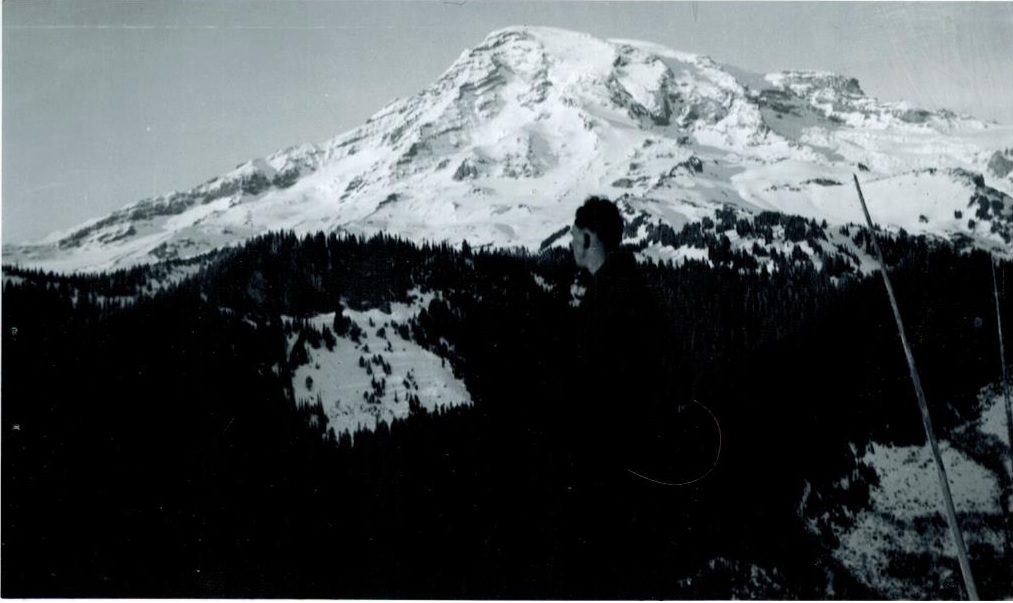
Mt. Rainier National Park, Francis Gutmann, Mount Ranier, looking down on Nisquelly Glacier, 1938, at View Point, 1./4 Mile West of Narada Falls
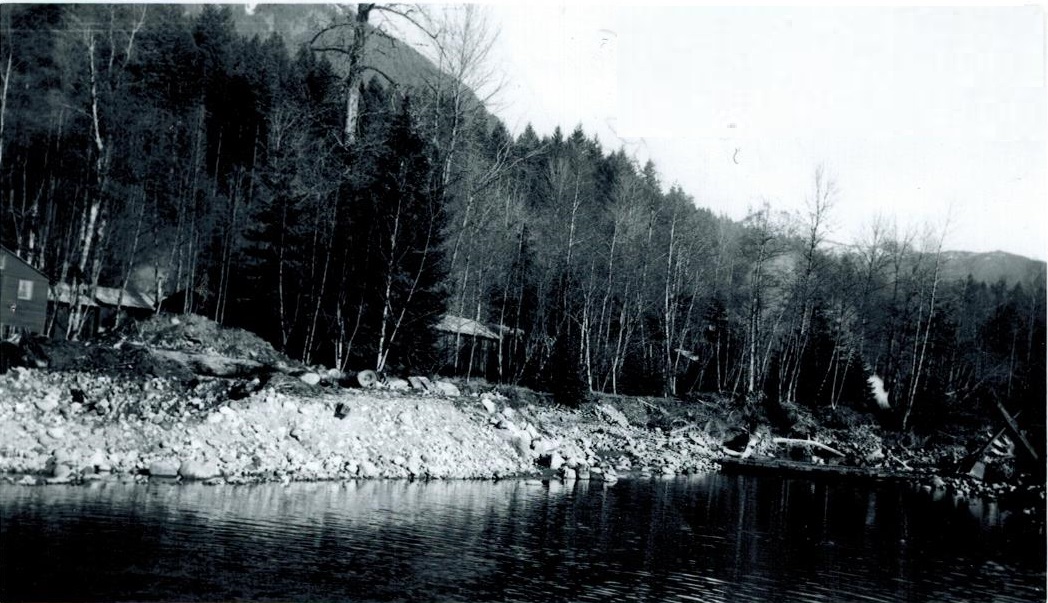
Co. 2941, Camp Sunshine Point, NP-2, Mt. Rainier National Park, along Nisquelly River at entrance to park. Now it is beautiful campground.
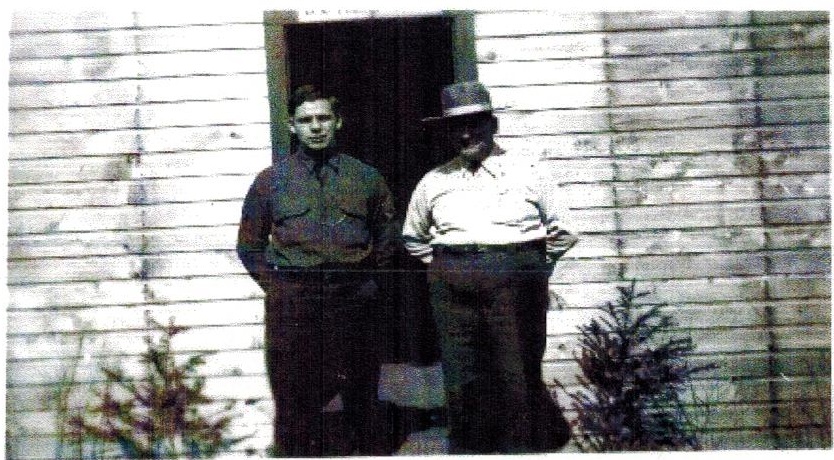
L.E.M. Francis Gutmann, Forestry Clerk (left), C. R. Kellog, Superintendent, 1938, Co. 2941, C.C.C. Camp Roy A-3.

Lt. Cull, 2nd in Command (left), Clyde Gasset, Senior Foreman (right)
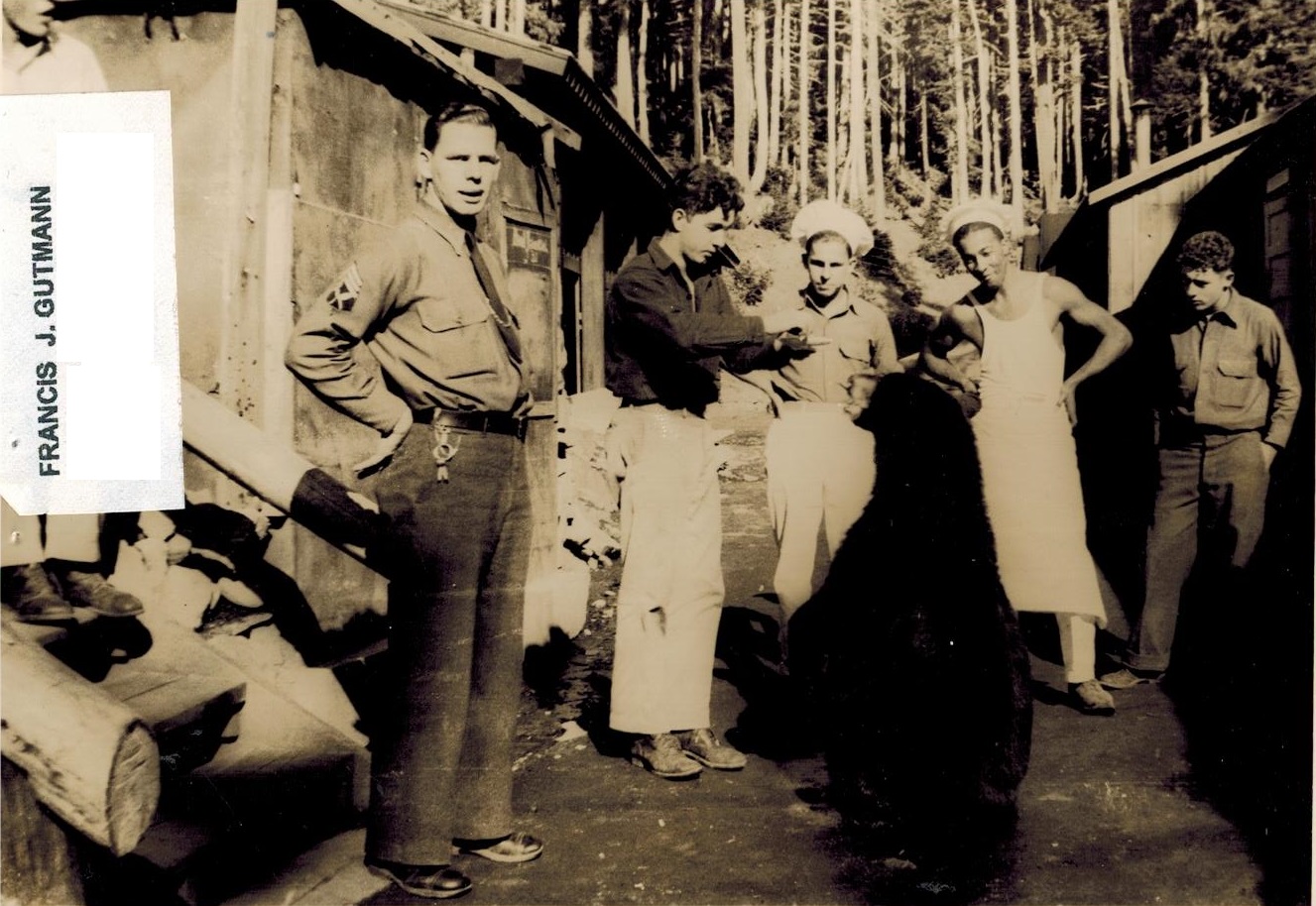
Francis Gutmann, LEM, Park Service Project Clerk, and group of CCC Enrollees, Mess Cooks, feeding out pet Black Bear outside the Mess Hall. Co. 2941, NP-2, Camp Narada Falls, 1937, Mt. Ranier National Park.
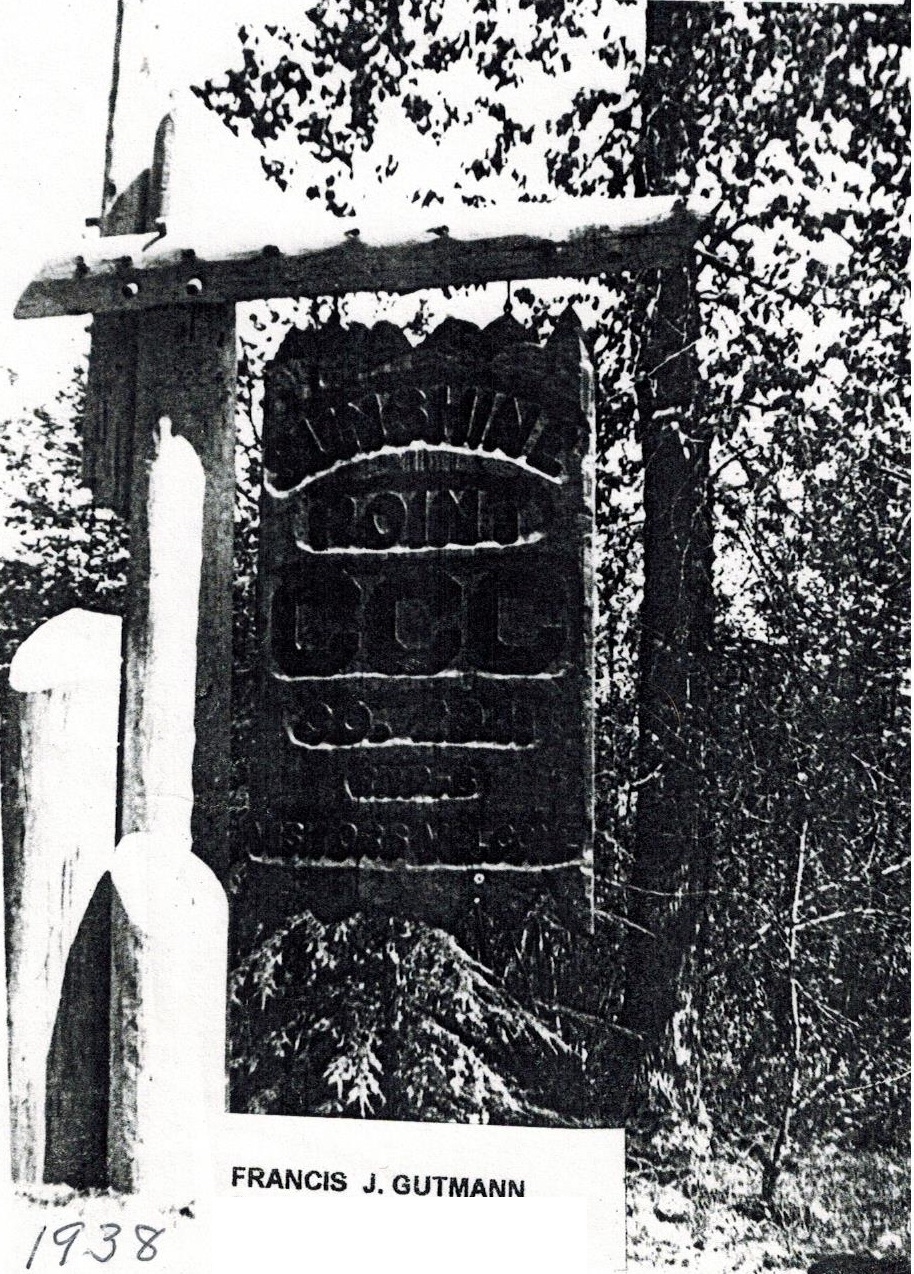
1938, Sign Entrance to Camp, Company 2941, Camp NP-8, Camp Sunshine Point, Longmire, Washington
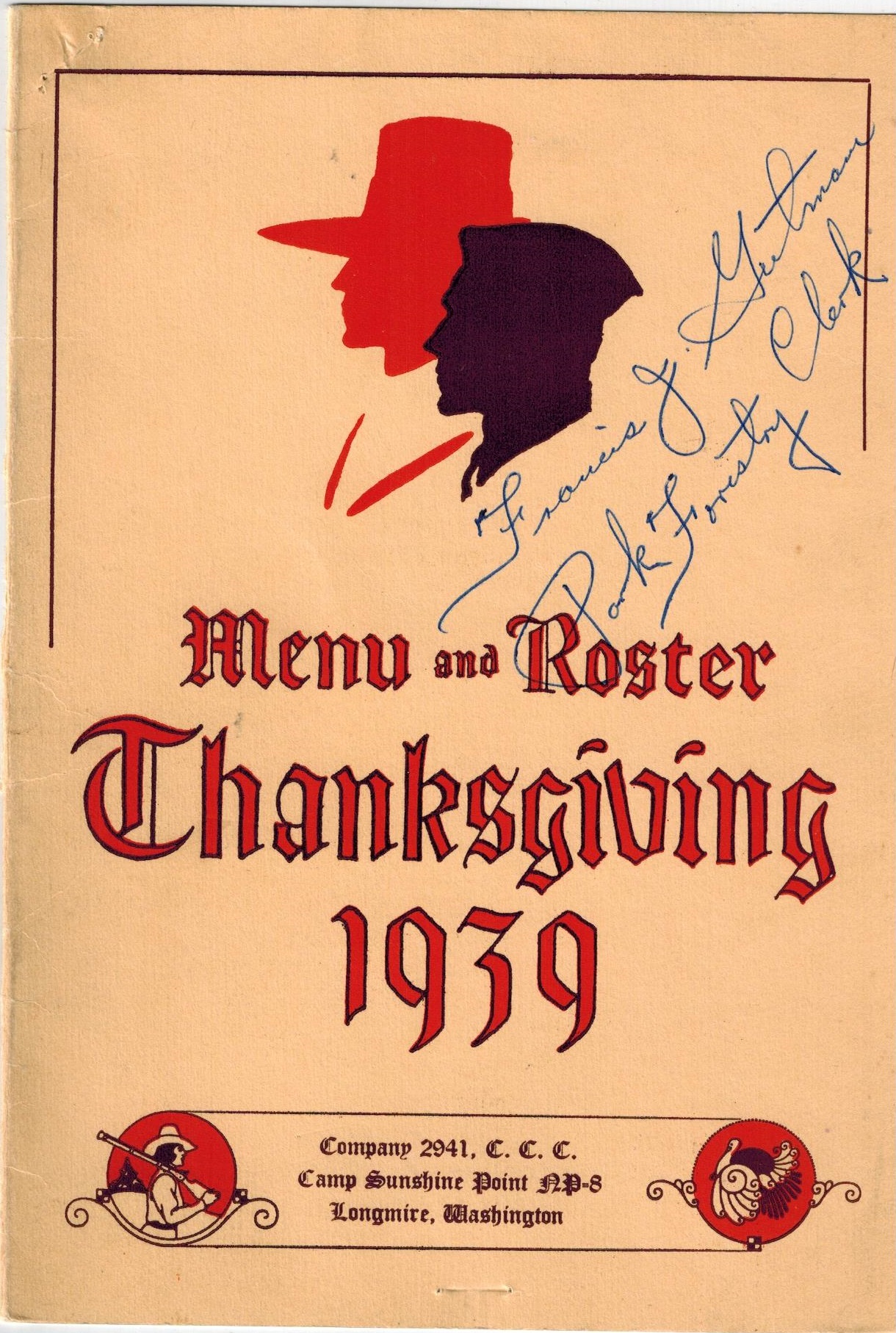
Cover, Thanksgiving Menu and Roster, 1939, Company 2941, Camp NP-8, Camp Sunshine Point, Longmire, Washington

Menu, Thanksgiving Menu and Roster, 1939, Company 2941, Camp NP-8, Camp Sunshine Point, Longmire, Washington
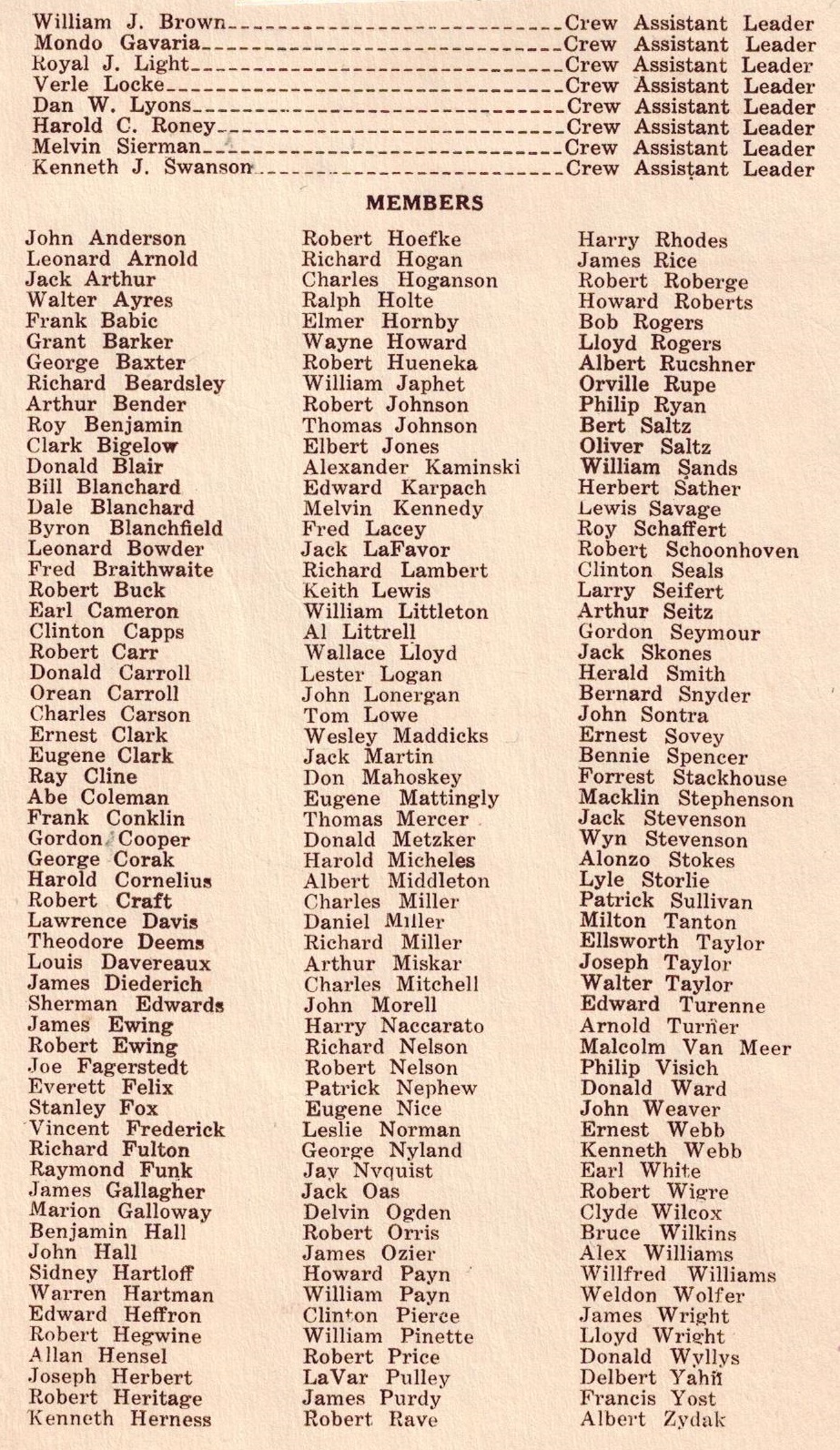
Roster, Thanksgiving Menu and Roster, 1939, Company 2941, Camp NP-8, Camp Sunshine Point, Longmire, Washington
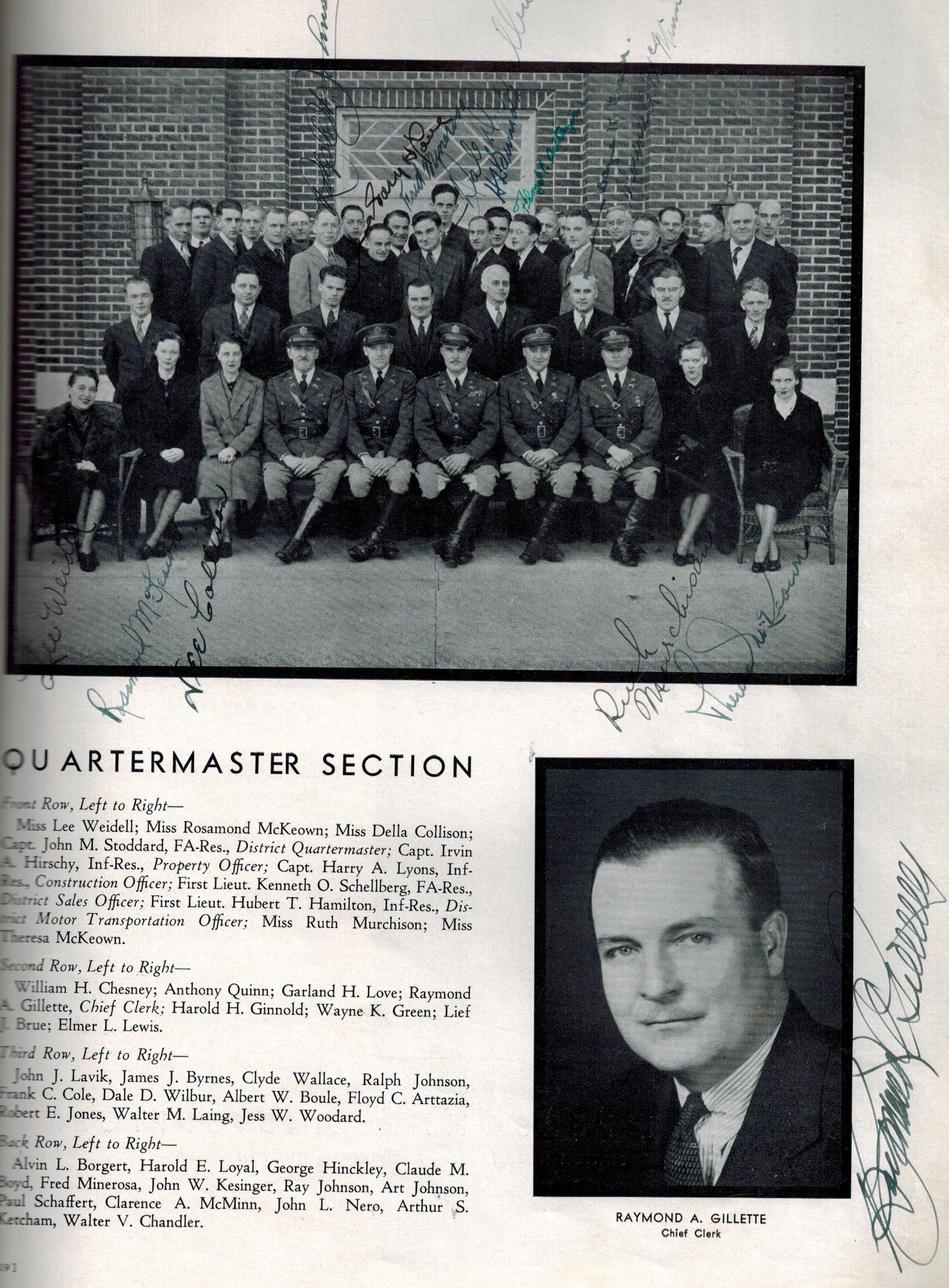
Quartermaster Staff, 1937 Annual
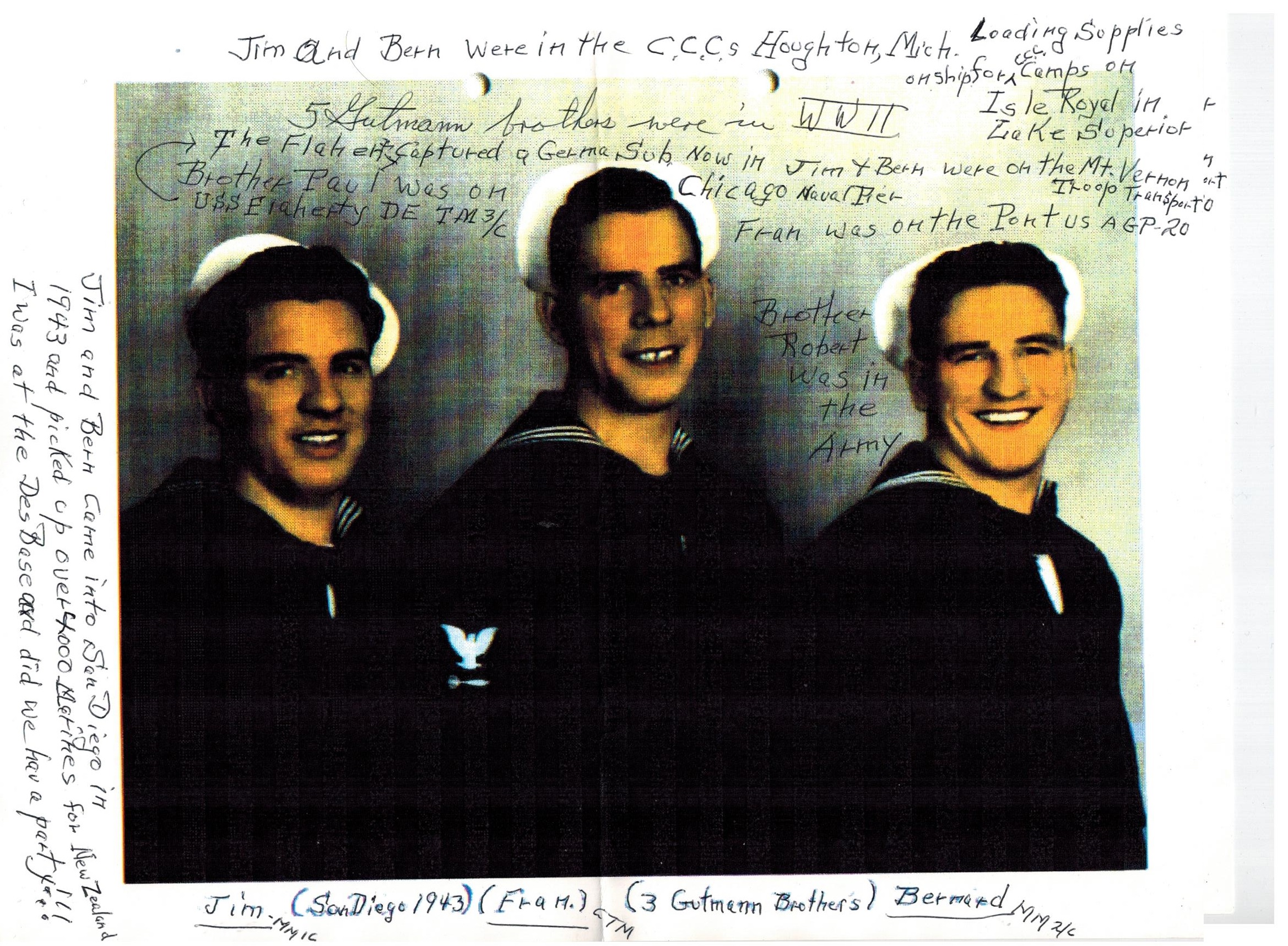
Jim, Francis, Bernard, San Diego, 1943
PT Boat Underway
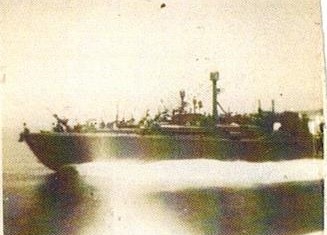
PT Boats Underway

Going to Manila From Subic Bay, PT 582
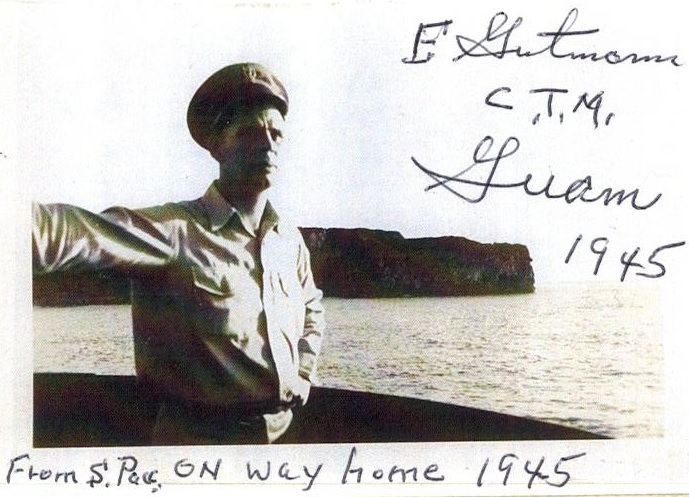
Francis Gutman, CTM, Guam from S. Pac. on the way home, 1945

PT 580, F. Gutman, Chief Torpedoman (right), Bill Williams, TM1/c (left), note 4" 8 Barrel Rocket Launcher
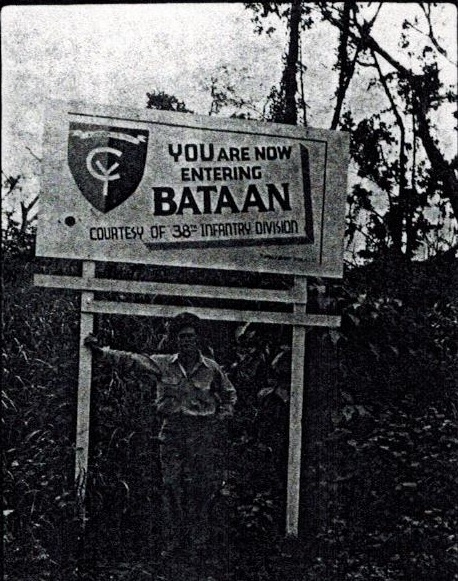
Zigzag Pass, Philippines Island, F. Gutman, Chief Torpedoman, Bataan, Philippines

F. Gutman, Chief Torpedoman with Mascot 'Rivet', PT 580, note MK-13 Torpedoes

Going Ashore, 'Battleship Landing' (note Saratoga, Ford Island in background), Pearl Harbor, Chief White CM/M, Officer White, Officer Wentz, Chief Gutman, from stern of LCVP
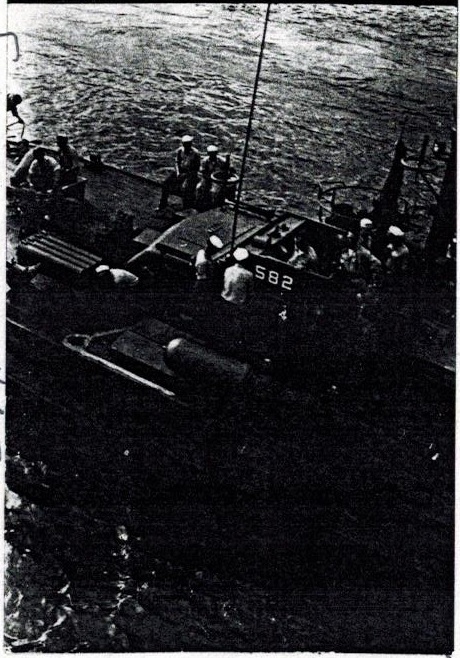
Going to Manila From Subic Bay, PT 582
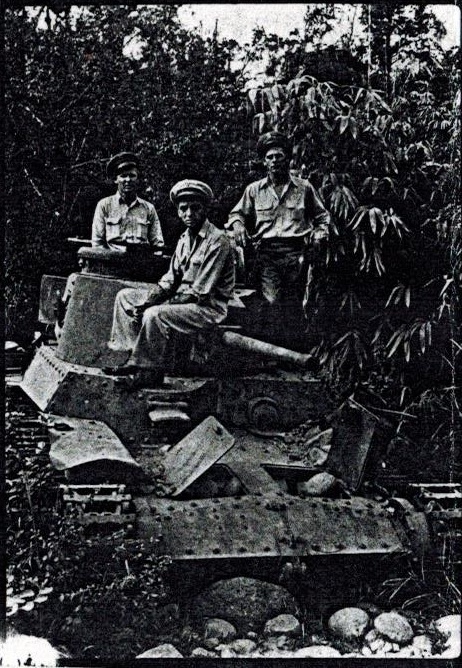
Chief Cable, Chief Gutman, Chief Carp, on Jap Type 97 Tank, Zig Zag Pass, Bataan, Philippines
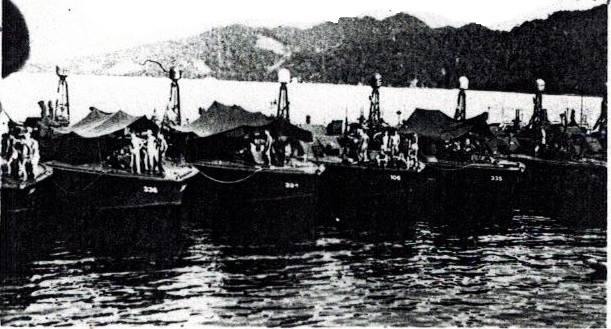
PT Squadron alongside USS Pontus, Bataan, Philippines

Miller, TM1/c, F. Gutman, CPO, PT 580, note MK-13 Torpedoes

Bill Williams, TM1/c, F. Gutman, CPO, PT,580, MK-13 Torpedoes
Burning Decommissioned PT Boat

Burning Decommissioned PT Boat
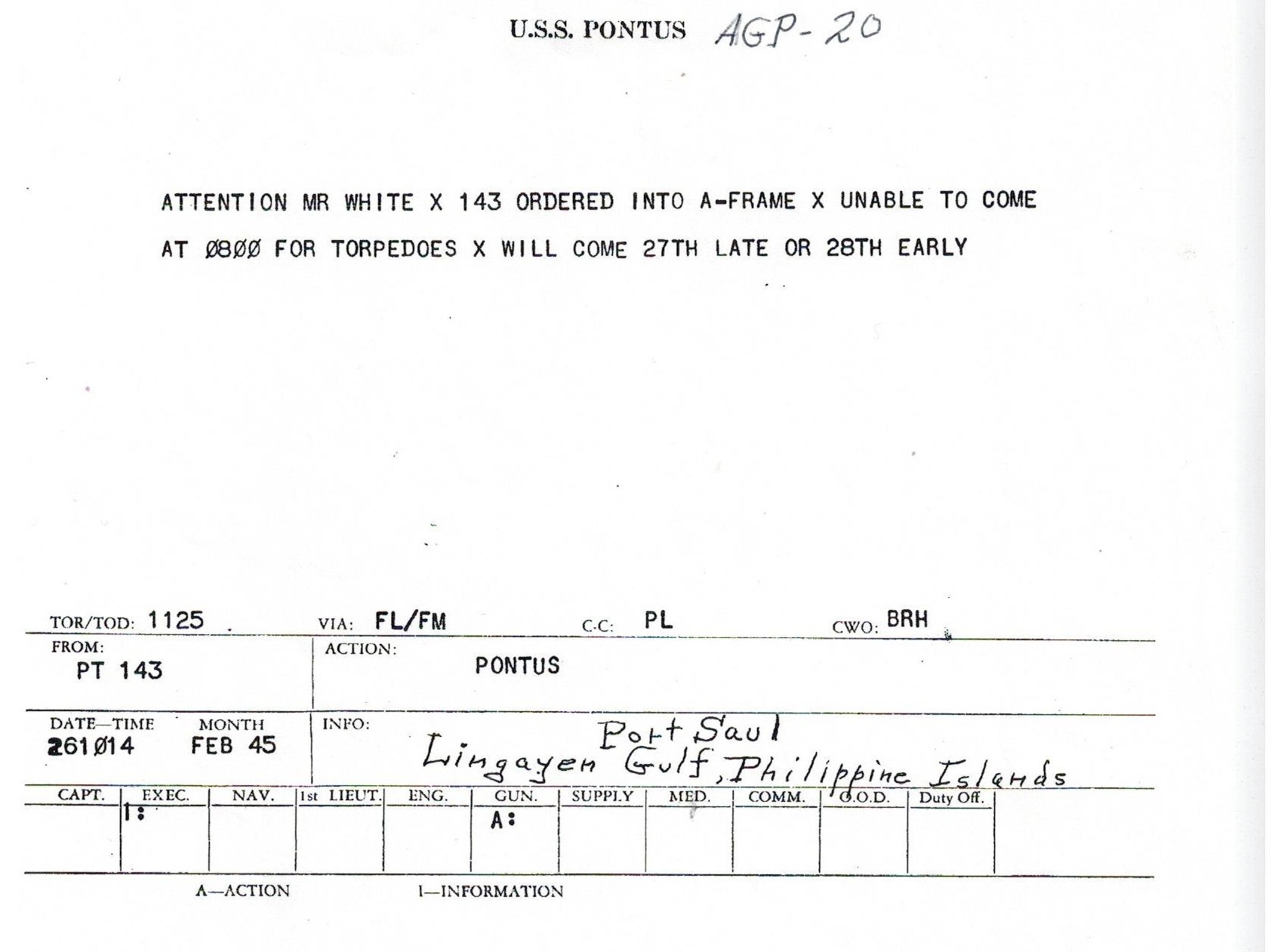
USS Pontus Communication Slip, regarding message from PT 143
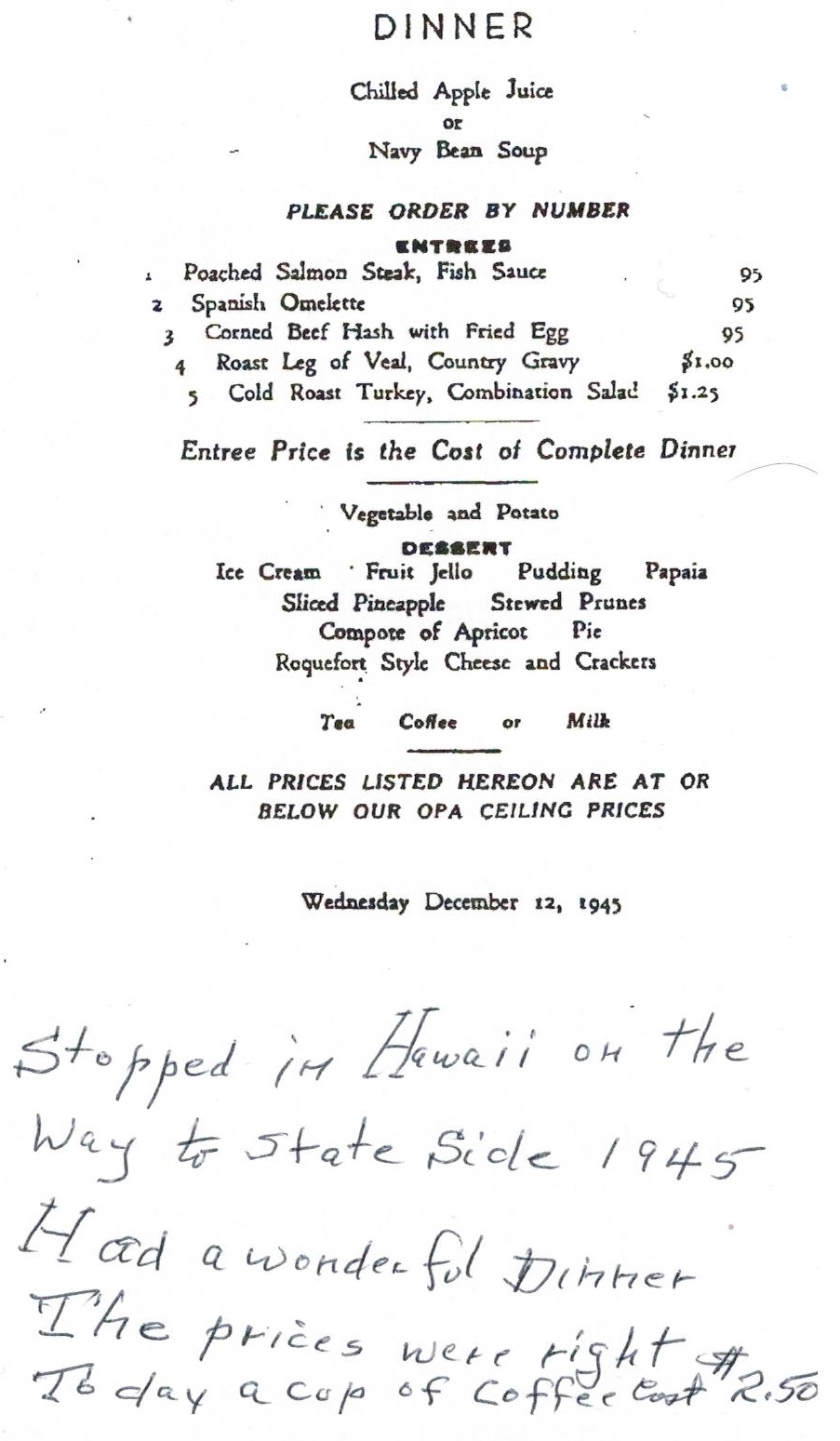
Alexander Young Hotel, Menu, Honolulu, Hawaii, on way Stateside, 1945
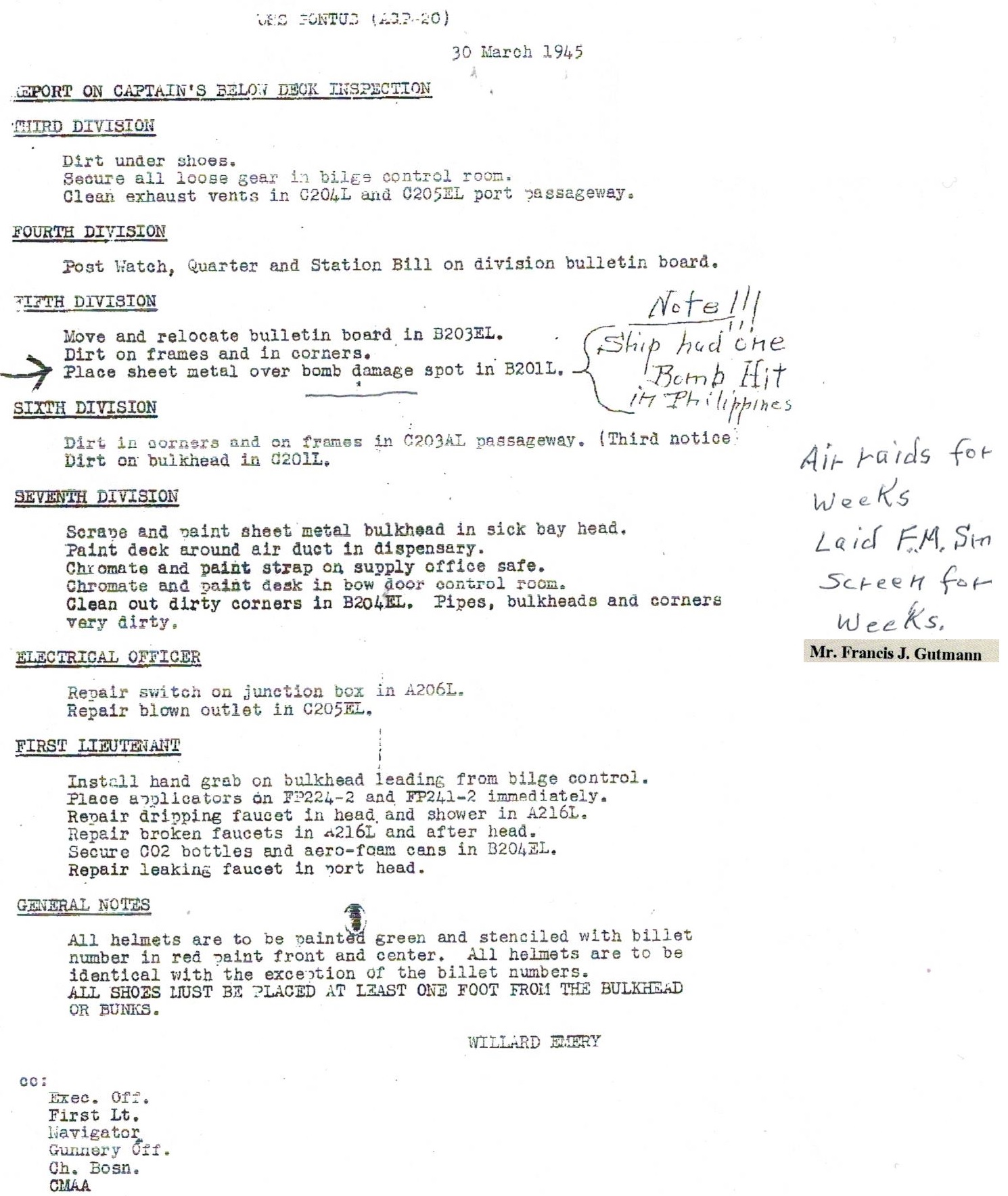
Report Captain's Below Deck Inspection Report, USS Pontus
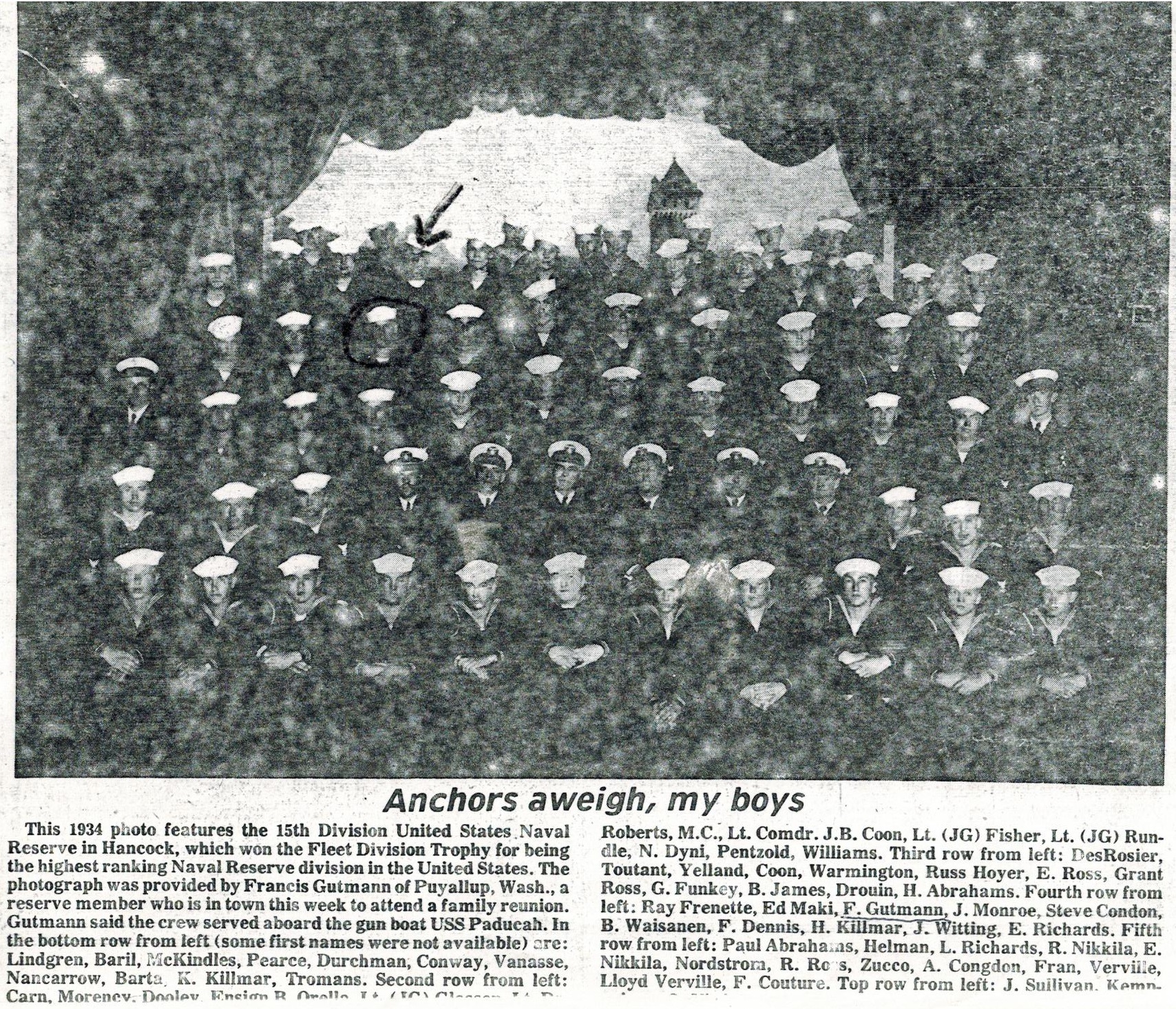
Crew Photo, USS Paducah, 15th Division U.S. Naval Reserve, 1934, Mr. Gutman circled.
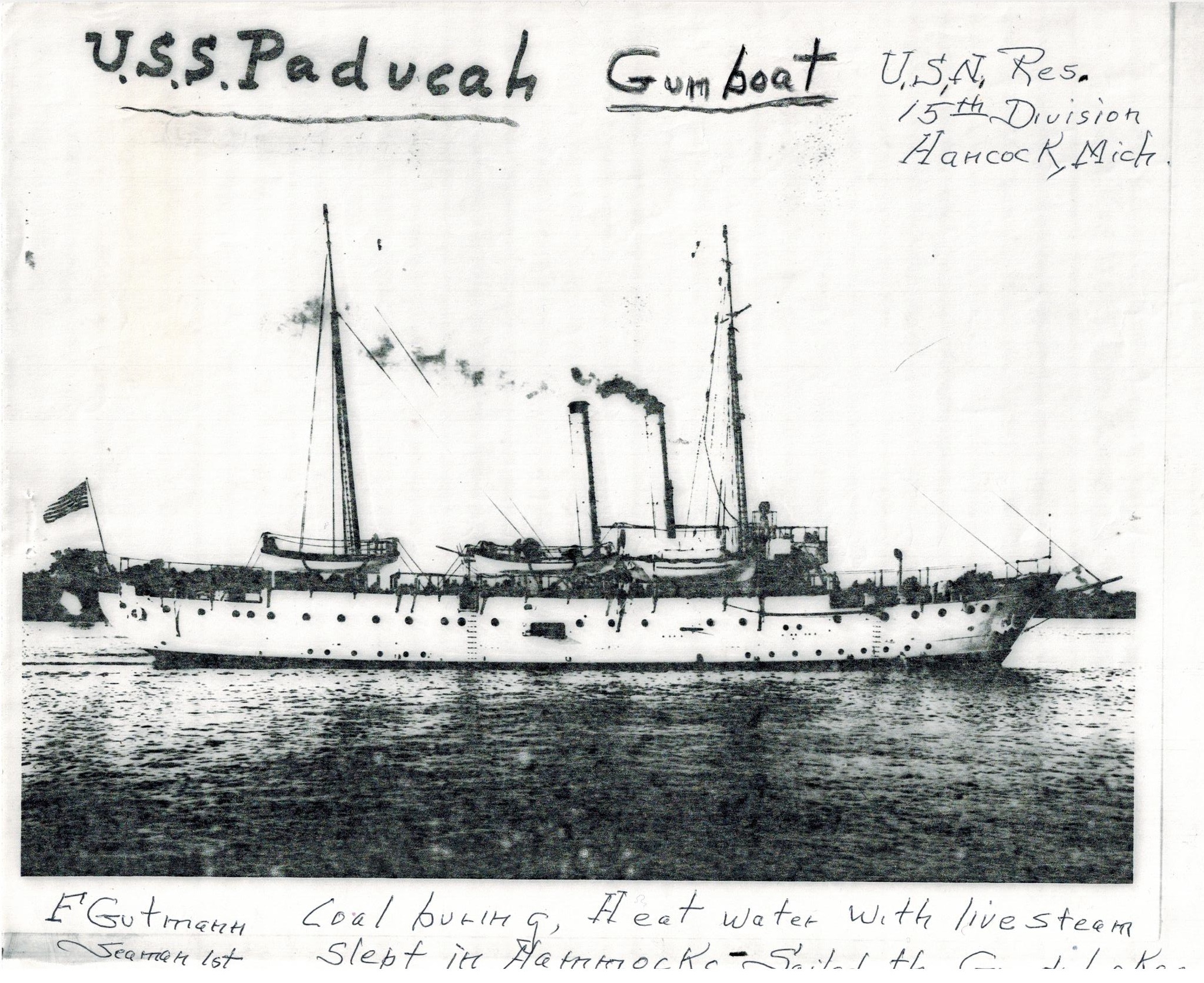
U.S.S. Paducah, gunboat
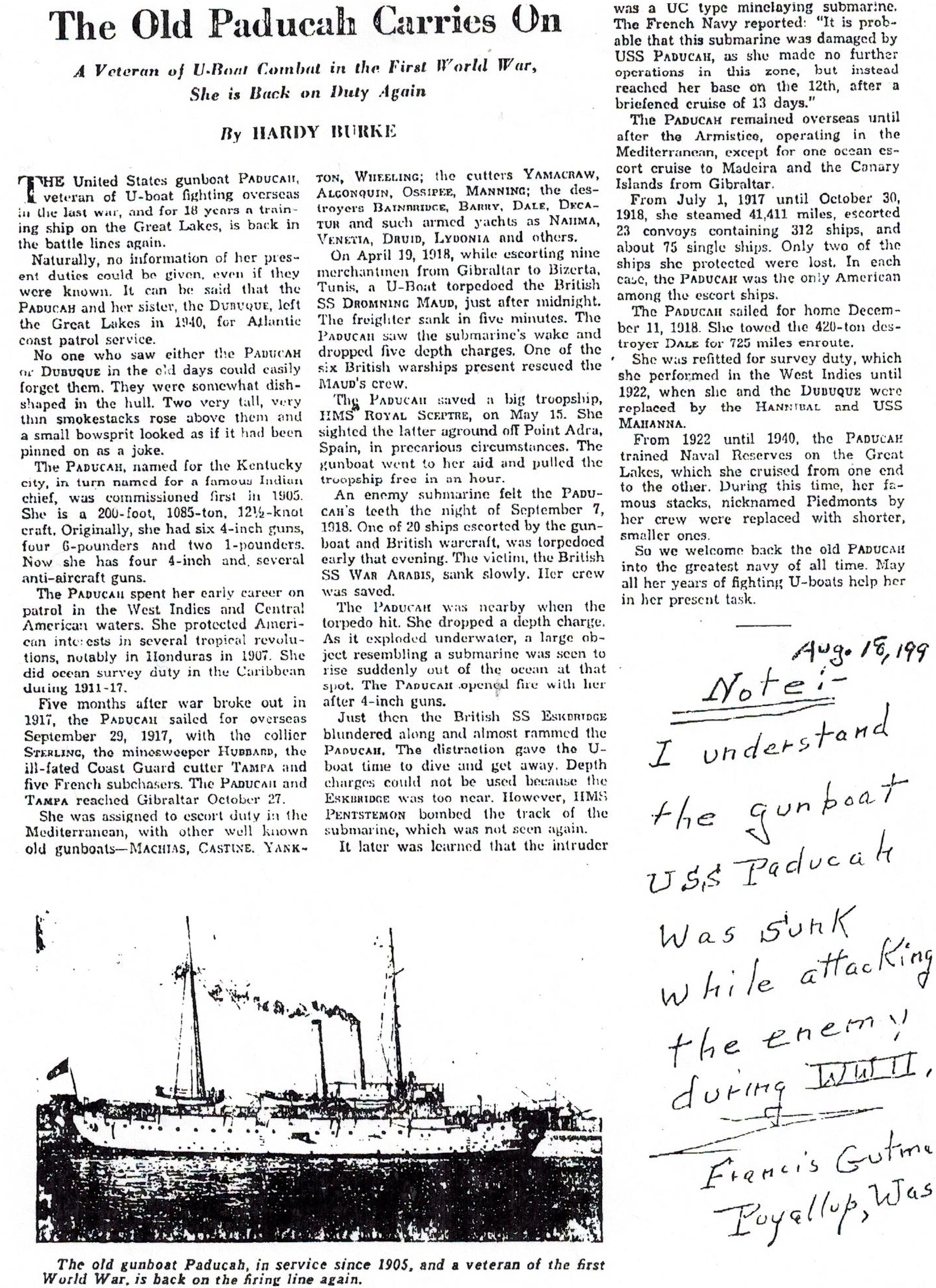
The Old Paducah Carries On, Article Stars Stripes(?)
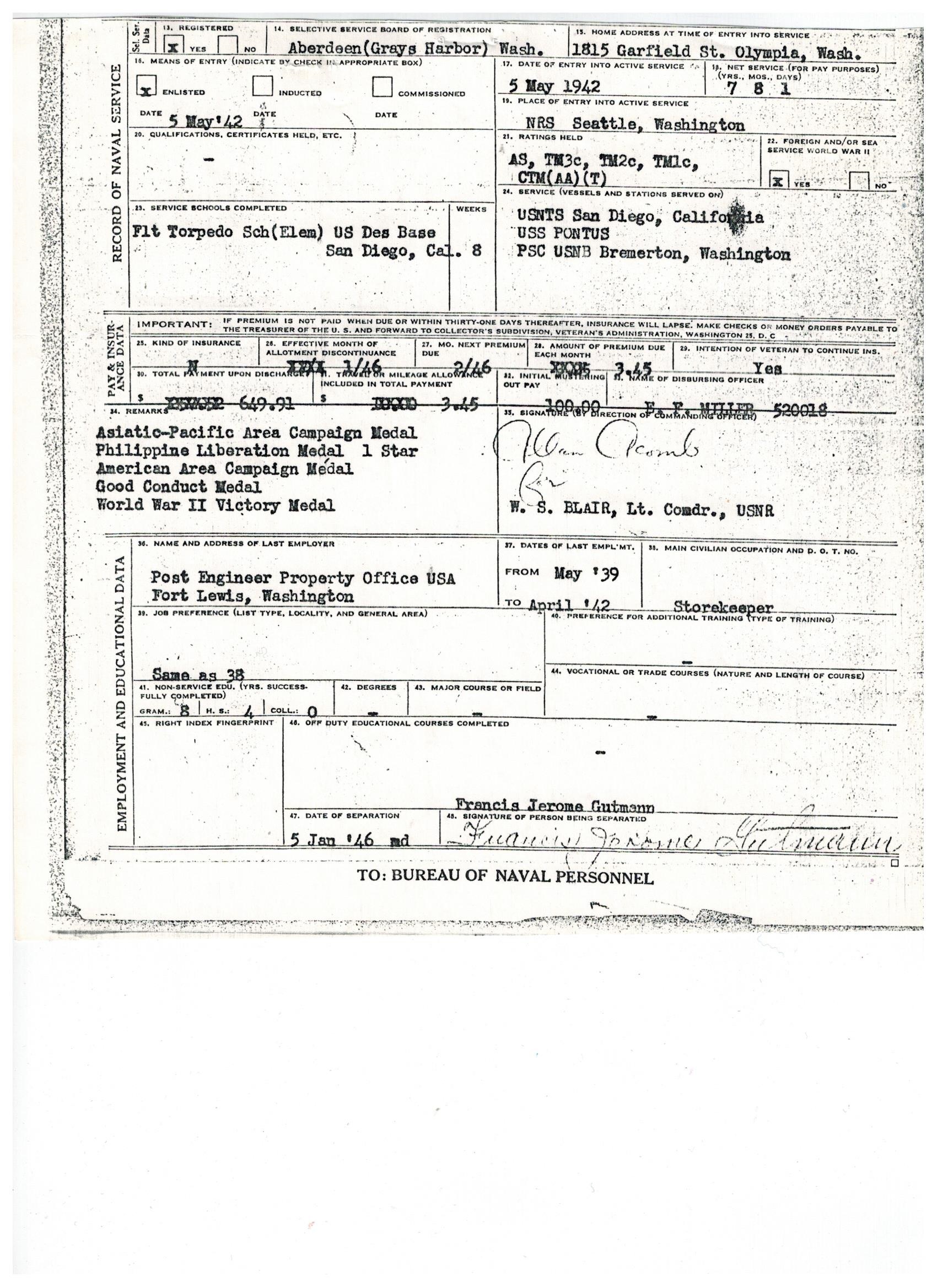
Notice of Separation from Naval Service, F. Gutman, Back
Notice of Separation from Naval Service, F. Gutman, Front
Honorable Discharge, USN, Francis Jerome Gutman
Service Record US Army Transportation Service, F. Gutman
USNS Funston Underway
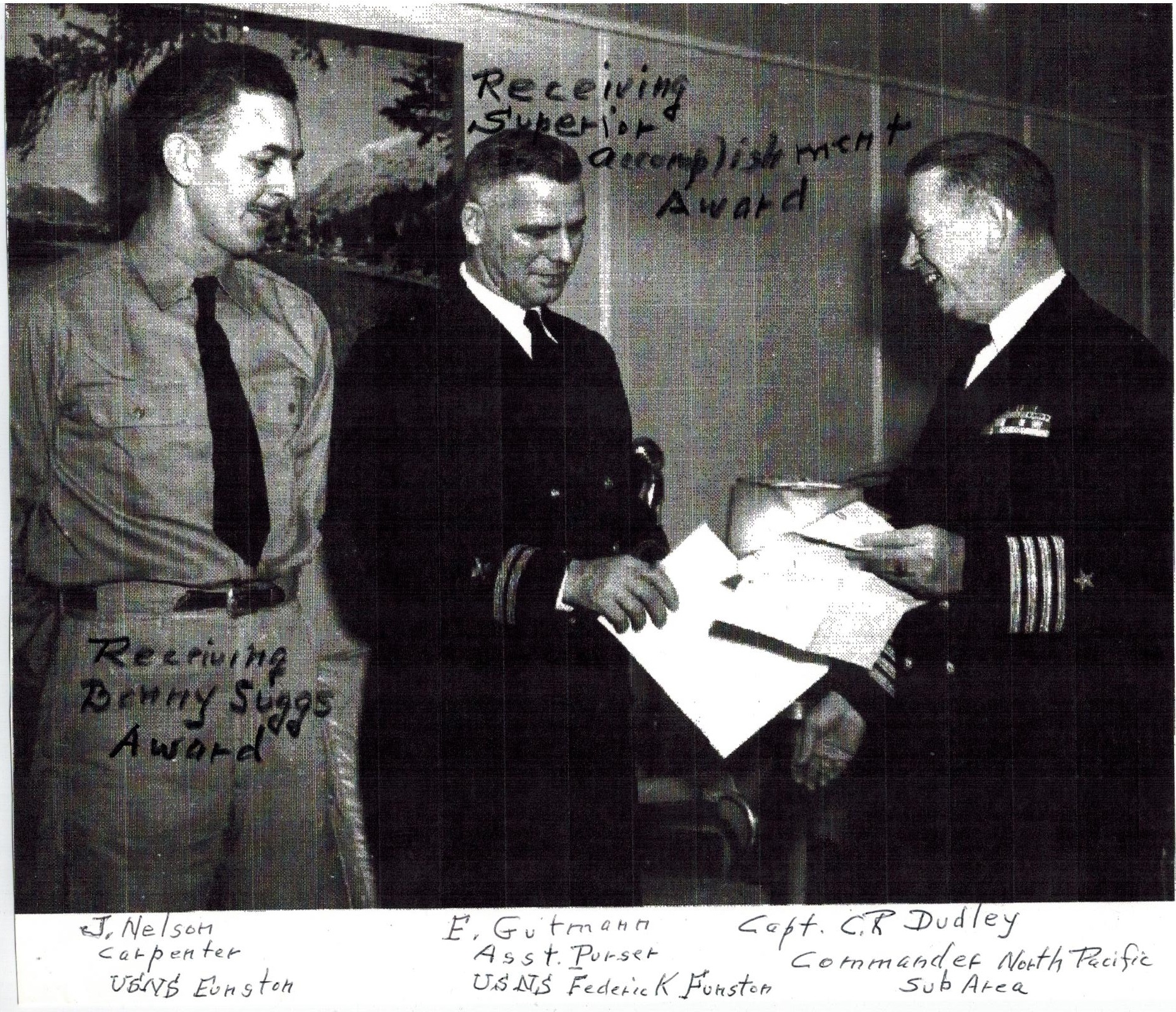
Receiving Superior Accomplistment Award, F. Gutman, Assistant Purser, USNS Funston, from Capt. C.R. Dudley, Commander North Pacific Sub Area, also J Nelson, Carpenter USNS Funston (right) who received Benny Suggs Award (Curator's Note, a Benny Suggs award is an award to those making Beneficial Suggestions (Bene Suggs), per Naval Regulations it is a cash award for money saving ideas, inventions or scientific achievements, scaled to compensate the recipient on a pay with a civilian employee).
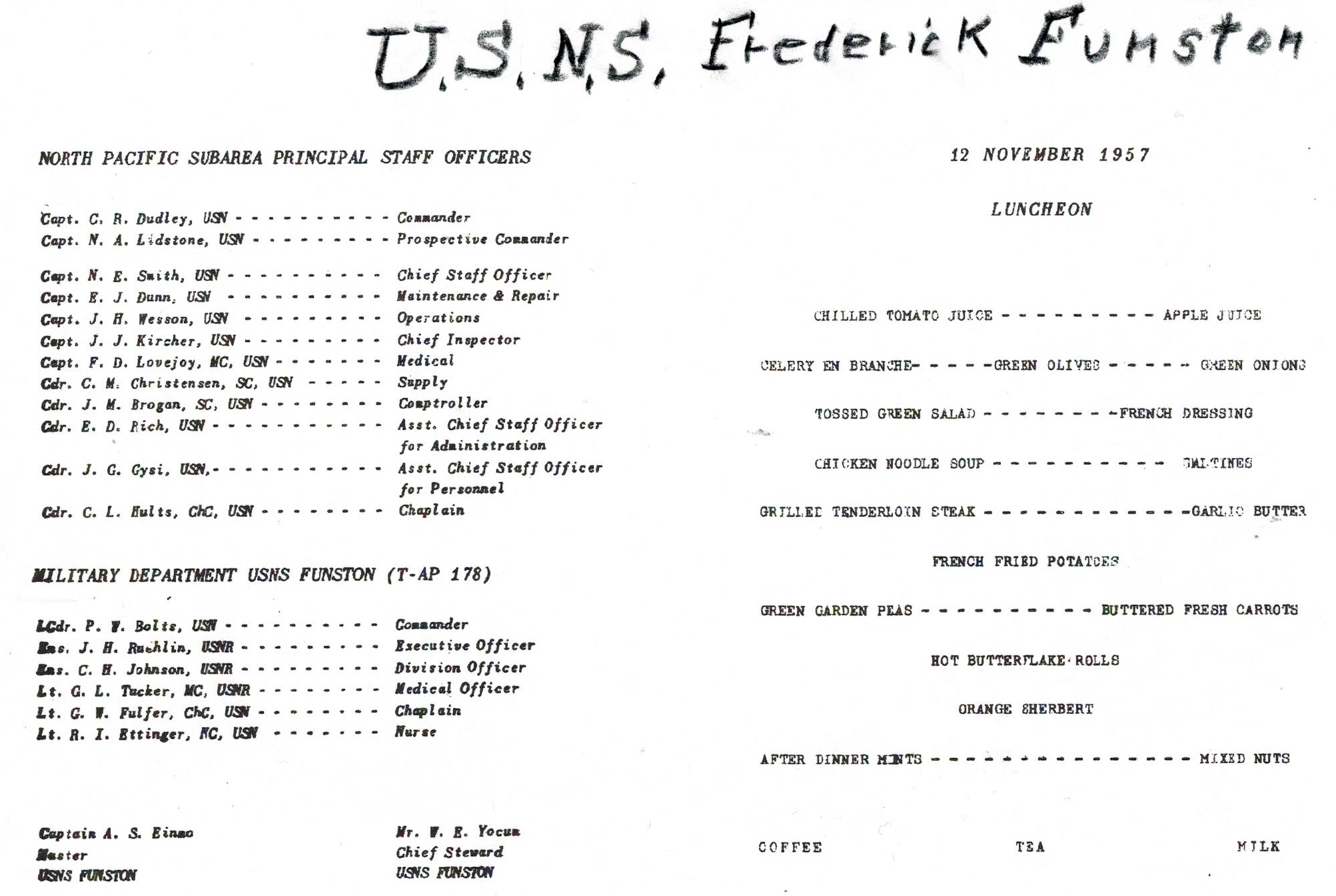
Luncheon Menu, USNS Funston
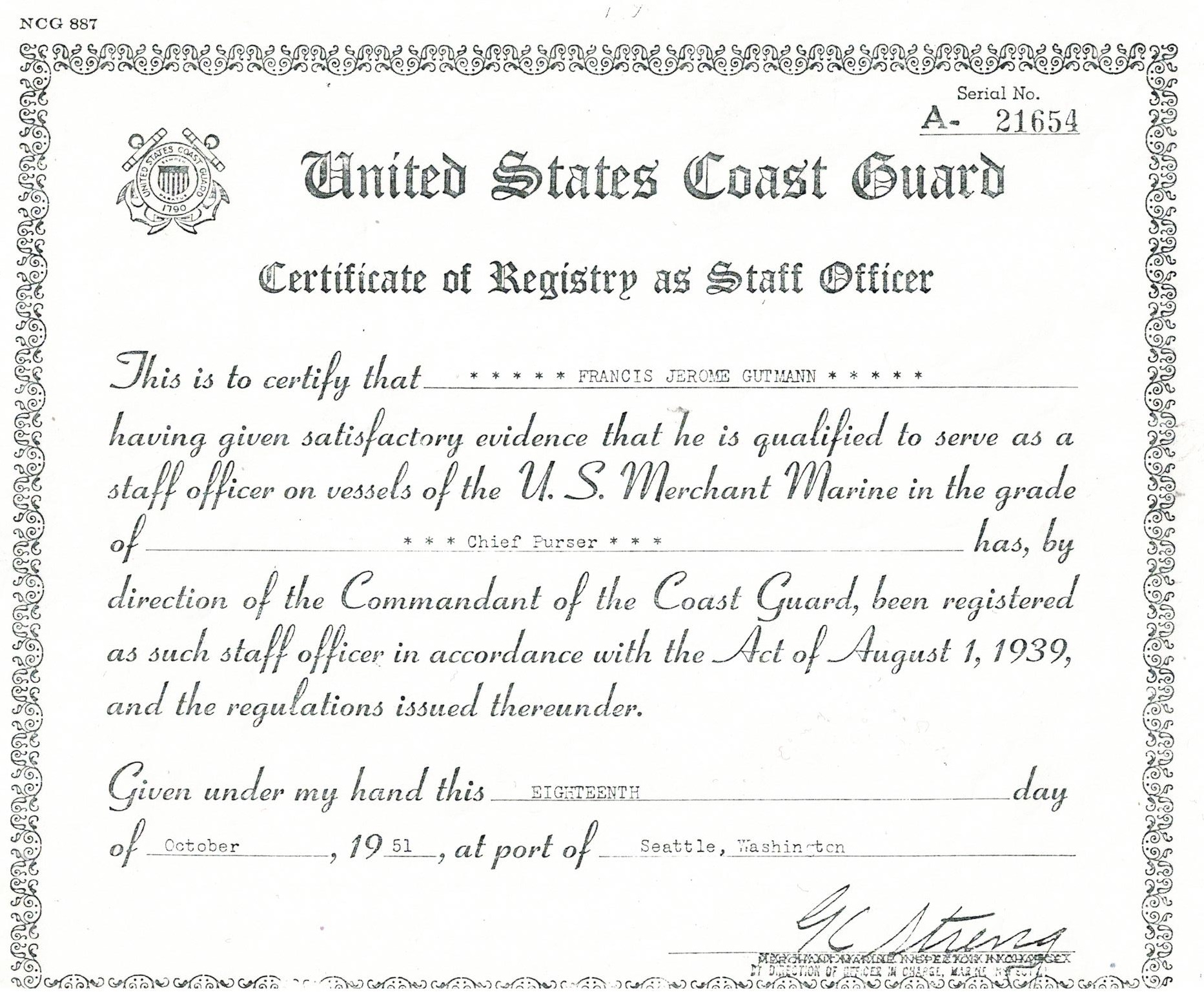
Certificate of Registry as Staff Officer, F. Gutman
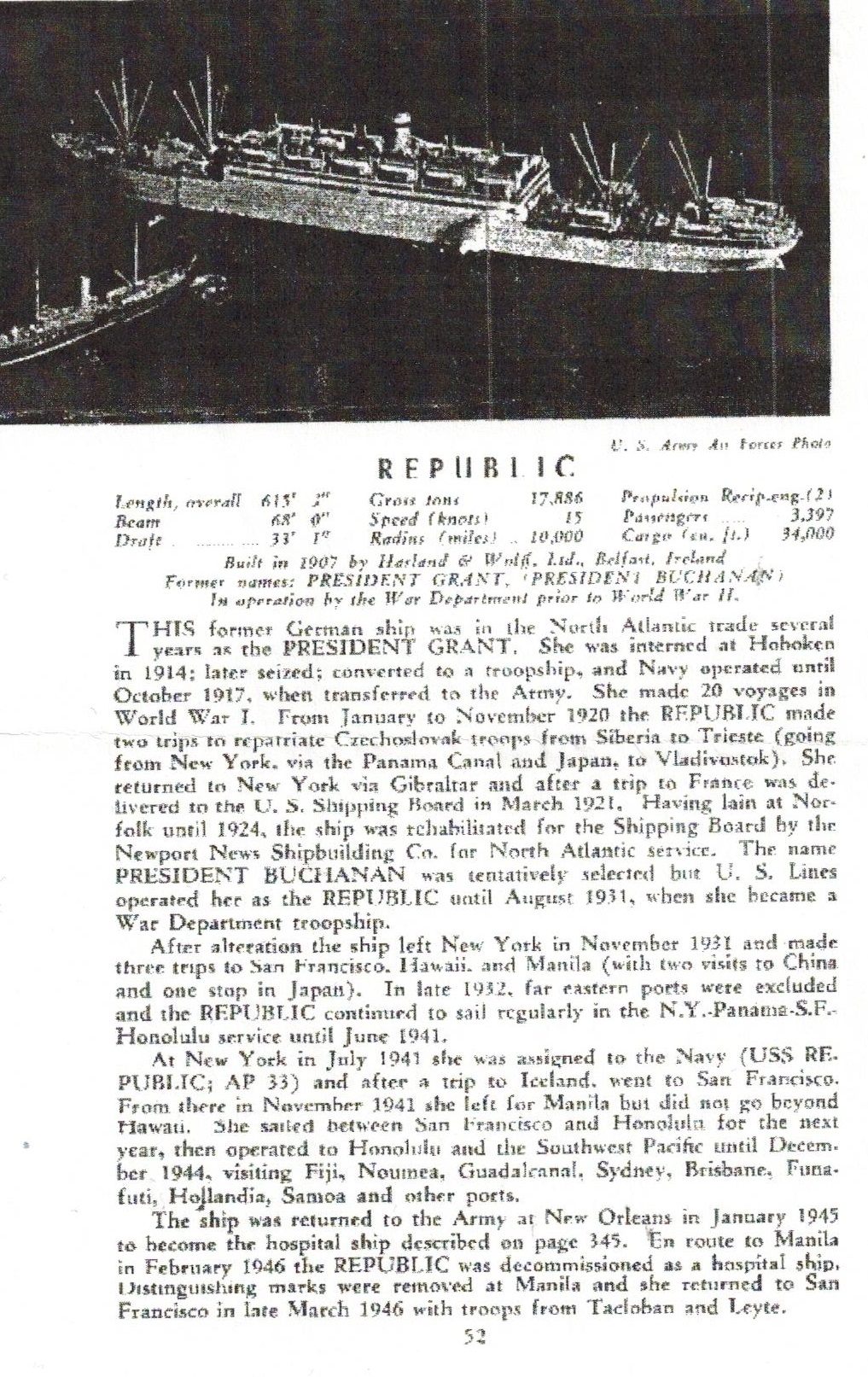
USAT Republic (where Mr. Gutman also served)
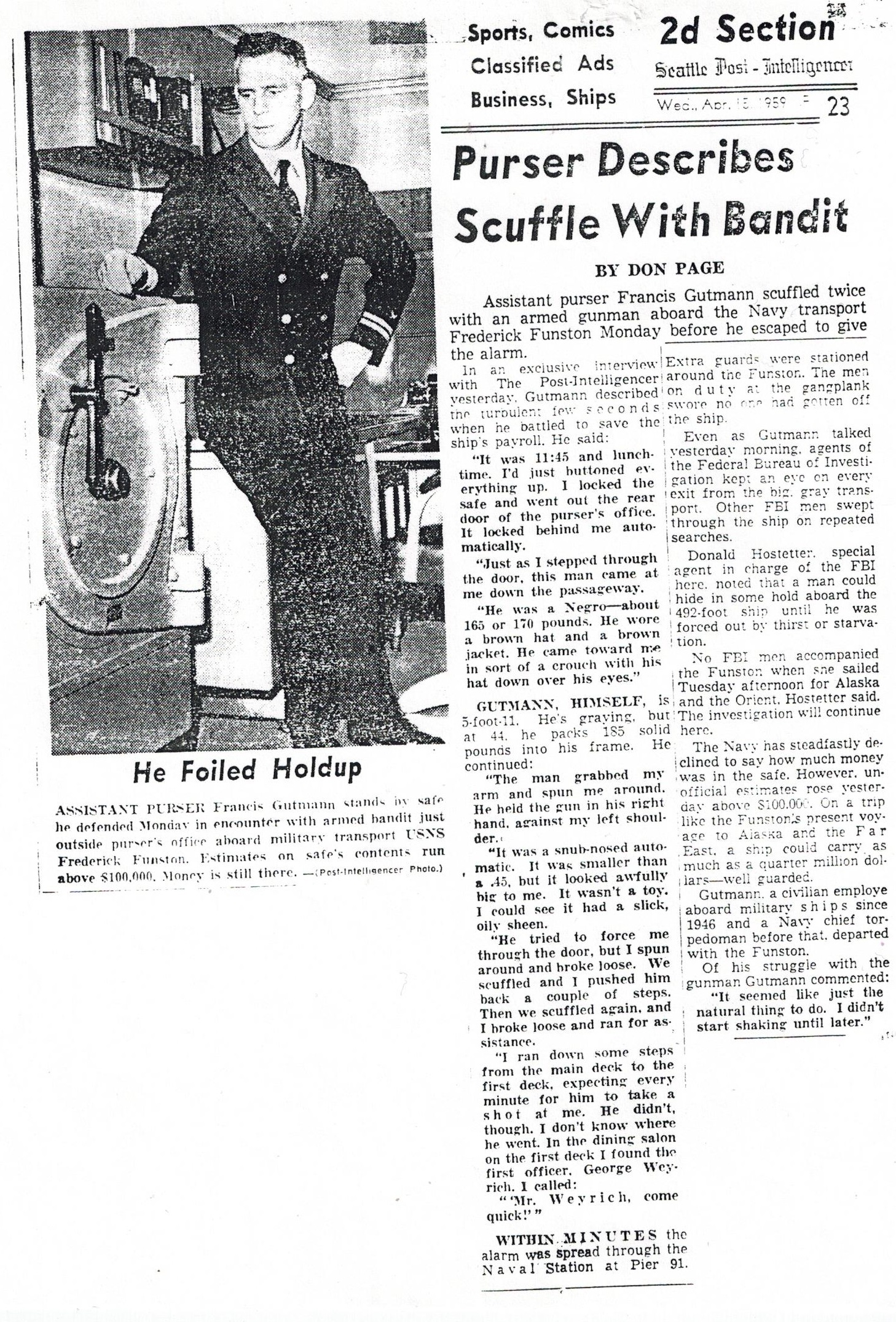
Article about Francis Gutman stopping an armed thief on the USNS Funston

Pursers Association Letterhead
LINKS
BACK TO James F. Justin Civilian Conservation Corps Museum Biographies
BACK TO JUSTIN ORAL HISTORY ARMY BIOGRAPHIES HISTORY PAGE
Also Be Sure to Visit
James F. Justin, Civilian Conservation Corps Museum
Justin Museum of Military History
Please Share your Stories! E-mail the Curator to share or discuss or with any questions!
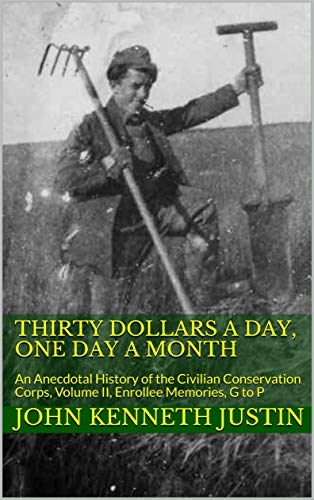
This story and more from this site are now available in Thirty Dollars A Day, One Day A Month: An Anecdotal History of the Civilian Conservation Corps, available from Amazon.com at the link below
Thirty Dollars A Day, Volume II Enrollee Memories G to P
Copyright 1999, 2000, 2001, 2002-2020 John Justin, All Rights Reserved
http://www.justinmuseum.com/oralbio/gutmanfjbio.html